

Choosing the correct XLPE cable size is critical for safety, performance, and long-term reliability in power systems. How to choose the right XLPE cable size? The answer depends on several key factors, including current load, voltage drop, installation conditions, insulation requirements, and environmental influences. Understanding these elements helps engineers and buyers avoid costly mistakes and select cables that match real operating demands.
In the cable and accessories industry, sizing is not just a technical calculation. It directly affects project cost, installation complexity, service life, and compliance with site requirements. For procurement teams, EPC contractors, panel builders, and utilities, the right choice often depends on balancing electrical performance with installation reality.
An undersized cable may overheat, lose efficiency, or fail early. An oversized cable can increase material cost by 10% to 30% and make bending, pulling, and termination more difficult. That is why a practical sizing method should combine ampacity, voltage drop, short-circuit strength, route conditions, and future load planning.
Core Electrical Factors That Determine XLPE Cable Size
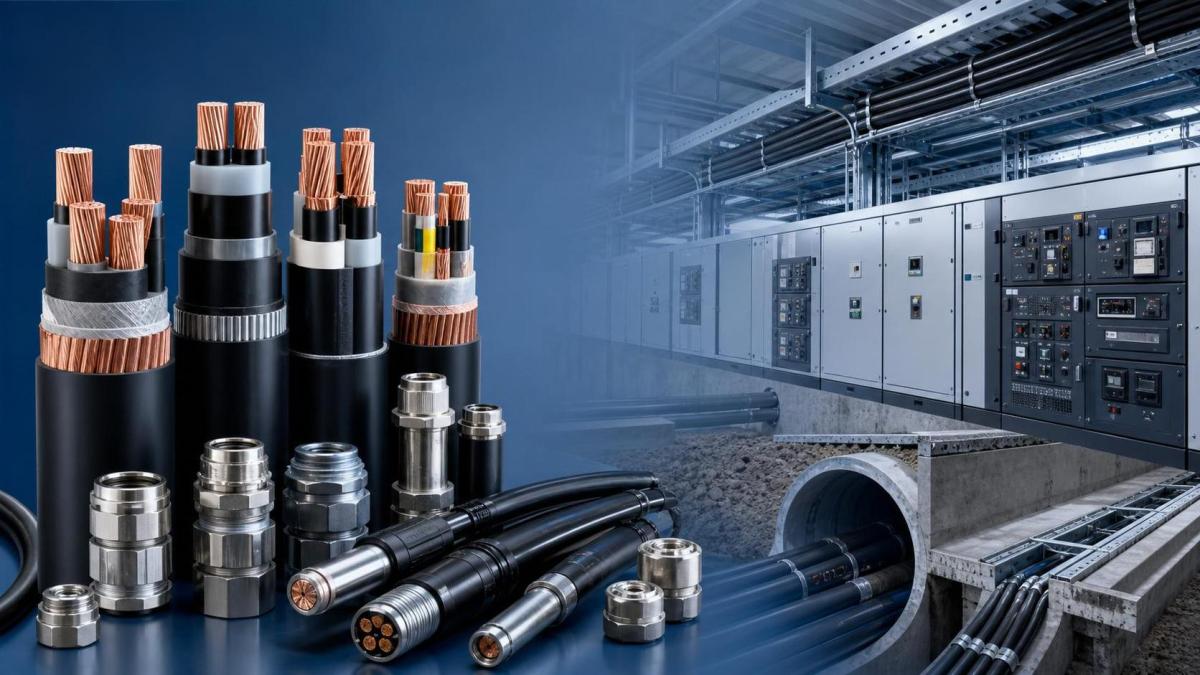
When asking how to choose the right XLPE cable size, the first step is always electrical demand. In most industrial and utility applications, at least 4 core parameters should be checked: design current, operating voltage, allowable voltage drop, and fault level. Skipping any one of them can produce a cable that looks adequate on paper but performs poorly on site.
Current Carrying Capacity Comes First
The cable must carry the full load current without exceeding its temperature limit. XLPE insulation usually allows a conductor operating temperature up to 90°C in normal service, which is higher than many PVC-insulated alternatives. Even so, the actual ampacity depends on conductor material, cross-sectional area, laying method, ambient temperature, and grouping conditions.
For example, a 4-core low-voltage XLPE copper cable installed in air may carry significantly more current than the same cable buried in soil with poor thermal resistivity. If 3 to 6 cables are grouped on a tray, derating factors may reduce usable current capacity by 15% to 40% depending on spacing and ventilation.
Practical current-sizing checks
- Confirm full-load current, not only nominal motor or transformer rating.
- Add expected load growth, often 10% to 25% for expanding facilities.
- Apply correction factors for ambient temperature above 30°C or 40°C, depending on the standard used.
- Review installation grouping, especially on ladder trays, ducts, or tunnels.
Voltage Drop Must Stay Within Design Limits
Voltage drop becomes more important as route length increases. In low-voltage distribution, common design practice is to keep total drop within 3% for sensitive loads or within 5% for many general power circuits, though project specifications can vary. Long feeders, high starting currents, and remote equipment often make this the deciding factor in conductor size.
A cable that meets ampacity may still be too small if the run is 120 m, 200 m, or longer. Pumps, compressors, and motor-driven systems are especially sensitive because low terminal voltage can reduce torque, increase heating, and create startup issues. In these cases, engineers often move up one or two conductor sizes.
Short-Circuit Withstand Strength Matters Too
Cable sizing should also account for the maximum fault current and clearing time. A conductor may carry normal load current safely but still be damaged during a short circuit if its cross-sectional area is too small. Typical checks use fault duration such as 1 second or 3 seconds, depending on the protection system.
This is especially important for medium-voltage feeders, transformer connections, and switchgear links where prospective short-circuit current can be high. In many projects, the final cable size is driven not by continuous load but by a combination of fault duty and voltage drop.
The table below shows how the main electrical factors influence cable size selection in typical project reviews.
The key takeaway is simple: the smallest cable that carries the load is not always the right cable. A proper decision checks electrical performance under both normal and abnormal operating conditions, then confirms whether the selected size still works with the actual route and environment.
Installation Conditions and Environmental Corrections
After the electrical baseline is established, the next question in how to choose the right XLPE cable size is where and how the cable will be installed. Site conditions can change the effective ampacity enough to force a larger size, even when the original design current remains unchanged.
Air, Tray, Duct, or Direct Burial
Installation method has a direct effect on heat dissipation. A cable laid in open air usually cools better than one inside a closed duct bank. Direct-buried cables depend heavily on soil thermal resistivity, backfill quality, burial depth, and moisture stability. A difference of just 0.7 to 1.5 K·m/W in soil conditions can noticeably change current capacity.
In tray systems, spacing also matters. Touching cables or tightly packed trefoils may need stronger derating than separated single layers. In tunnel or basement installations, ambient air can remain above 40°C for long periods, reducing permissible current compared with the same cable installed at 25°C to 30°C.
Ambient Temperature and Grouping Derating
Derating factors are often underestimated in purchasing decisions. If a catalog value is based on 30°C ambient air, but the actual cable tray operates at 45°C, the available current rating may drop substantially. Similar reductions happen when 4, 6, or 9 circuits share the same trench or tray with limited spacing.
In heavy industry, rooftop solar plants, process areas, and substations near heat sources, temperature correction can no longer be treated as a minor adjustment. Buyers should ask suppliers or design teams to confirm corrected ampacity, not only nominal catalog ampacity.
Common installation checks before finalizing size
- Measure actual route length, including bends, risers, and termination slack.
- Identify installation type: air, tray, conduit, duct bank, trench, or buried.
- Confirm maximum ambient temperature and seasonal variation.
- Count parallel or grouped circuits and review spacing.
- Check minimum bending radius and pulling tension during installation.
The following table summarizes how typical site conditions can affect XLPE cable sizing decisions.
In many projects, installation conditions explain why the field-selected cable is larger than the first design estimate. This is not overspecification. It is often a necessary adjustment to preserve thermal stability, simplify cable pulling, and avoid repeated shutdowns caused by overheating or nuisance trips.
Insulation, Conductor Material, and Application-Specific Requirements
Another important part of how to choose the right XLPE cable size is understanding that conductor area is only one part of the cable structure. Voltage class, conductor material, sheath type, armoring, and application environment all influence the final selection. Two cables with the same nominal cross section may perform very differently in real service.
Copper vs Aluminum Conductors
Copper conductors offer higher conductivity and often allow a smaller cross section for the same current. Aluminum cables are lighter and usually more cost-effective in larger sizes, especially for long feeders. However, aluminum may require a larger conductor area, larger bending space, and compatible lugs and connectors to maintain reliable terminations.
For buyers comparing total installed cost, conductor price alone is not enough. A 240 mm² aluminum cable may compete with a smaller copper option in material cost, but termination hardware, cable cleats, tray space, and labor can change the final project economics. The best choice depends on route length, connection count, and fault level.
Voltage Class and Insulation Design
XLPE is widely used in low-voltage and medium-voltage systems because it offers good electrical strength, low dielectric losses, and strong thermal performance. Still, cable size selection must align with system voltage. A 0.6/1 kV cable and an 8.7/15 kV cable may share the same conductor area, but insulation thickness, screening layers, accessories, and installation practices differ significantly.
Medium-voltage applications also require careful attention to stress control, shielding continuity, and matching accessories such as joints and terminations. If the cable accessories are not selected with the same voltage class and installation environment in mind, even a correctly sized conductor can become a weak link.
Mechanical and Environmental Protection
Industrial sites often need more than electrical compliance. Cables exposed to impact, rodent risk, moisture, chemicals, UV, or buried installation may need armoring, water barriers, or special outer sheaths. These features do not replace correct sizing, but they are essential for long-term reliability over 15 to 30 years of service.
In offshore, mining, and infrastructure projects, choosing the right XLPE cable size also means selecting a structure that can survive the environment. A technically adequate cable that fails mechanically will still create downtime, replacement cost, and safety exposure.
Application questions buyers should ask
- Is the system low voltage, medium voltage, or a specialized distribution network?
- Will the cable be fixed, frequently loaded, or exposed to vibration?
- Is armoring required for buried routes or mechanical protection?
- Are accessories matched to insulation type, conductor size, and voltage class?
- Will future expansion require spare capacity within 2 to 5 years?
A Practical Sizing Workflow for Engineers and Procurement Teams
A structured process reduces rework and makes supplier communication clearer. In practice, most successful cable selection reviews follow 5 steps. This approach is useful for OEMs, contractors, utility buyers, and industrial plant teams that need a repeatable way to compare options and control project risk.
Step 1: Define the Electrical Load
Start with rated current, demand profile, operating voltage, power factor, and fault level. If motors are involved, include starting current and duration. If the line supplies future expansion, add a realistic margin instead of default oversizing. In many facilities, a 15% future reserve is more practical than an arbitrary 50% increase.
Step 2: Confirm the Installation Route
Document the route length, installation method, tray grouping, trench depth, ambient temperature, and any special constraints. A difference of 20 m to 40 m in actual route length can materially affect voltage drop, especially in low-voltage systems with heavy current.
Step 3: Apply Correction Factors and Standards
Use the relevant project standard or design method to apply temperature, soil, grouping, and installation correction factors. Also confirm local code expectations and whether IEC-based or other design practices apply. The goal is to compare cables on corrected operating capacity, not just nominal catalog values.
Step 4: Check Accessories and Installation Practicality
Make sure cable lugs, glands, joints, terminations, and cleats are available for the selected conductor size and construction. Very large cables may create issues with gland plate entry, minimum bending radius, or switchgear termination space. These practical checks often prevent late-stage changes during installation.
Step 5: Compare Total Project Value
The final decision should consider not only cable price per meter but also installation labor, accessories, electrical losses, maintenance exposure, and expected service life. A slightly larger cable can sometimes reduce lifetime loss cost, while a smaller cable may look cheaper only at purchase stage.
The table below can be used as a procurement checklist before placing an XLPE cable order.
This workflow helps both technical and purchasing teams speak the same language. It turns the sizing question from a single number into a full project decision that covers performance, installation, and operating risk.
Common Mistakes When Choosing XLPE Cable Size
Many field problems come from a few repeated mistakes. Recognizing them early can save weeks of redesign, costly cable replacement, and commissioning delays.
Using Catalog Ampacity Without Corrections
This is one of the most common issues. Standard ratings are usually based on specific installation assumptions. If the real installation differs, the actual safe current can be much lower.
Ignoring Voltage Drop on Long Runs
A feeder that works for 30 m may fail design limits at 180 m. This is especially risky in low-voltage motor circuits and remote utility services.
Focusing Only on Purchase Price
The cheapest cable per meter may not be the lowest-cost solution after accessories, losses, route constraints, and maintenance are considered. Procurement decisions should compare installed and operating value, not only unit price.
Overlooking Accessories and Termination Space
Cable glands, lugs, and joint kits must match the selected conductor size and construction. If switchgear space is tight, a technically correct cable can still be difficult to terminate safely and neatly.
Choosing the right XLPE cable size requires more than a quick current lookup. The best decision combines 5 key checks: ampacity, voltage drop, short-circuit performance, installation condition, and application-specific construction. When these factors are reviewed together, engineers and buyers can reduce overheating risk, control cost, and improve long-term reliability.
If you are evaluating low-voltage or medium-voltage cable options, planning a new project, or comparing conductor sizes for a complex route, a detailed technical review can prevent expensive errors before procurement begins. Contact us now to get a tailored XLPE cable selection plan, discuss product details, or explore more cable and accessory solutions for your application.