

Copper Power Cable vs Aluminum: Cost and Lifespan Trade-Offs
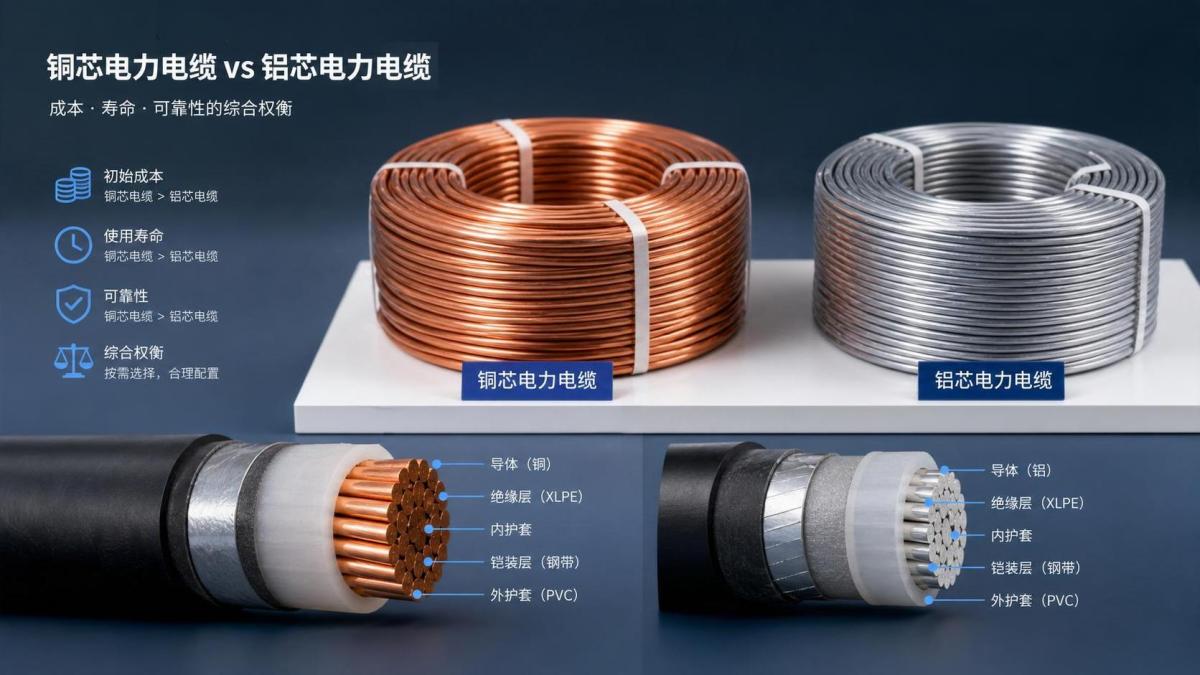
Choosing between a copper power cable and aluminum is not only about purchase price. It also shapes installation quality, energy efficiency, maintenance frequency, and total project value.
For many projects, the real question is simple. Should you pay more now for stability, or save upfront and manage higher lifetime risk later?
That trade-off matters most when cable runs are long, loads are critical, and shutdowns are expensive. In those cases, material choice becomes a procurement decision with operational consequences.
A copper power cable usually costs more per meter. However, it often delivers better conductivity, stronger mechanical performance, and a longer useful life under demanding conditions.
Aluminum remains attractive because it lowers initial spending and reduces cable weight. That can be valuable in large-volume purchases, long routes, and price-sensitive infrastructure work.
The best option depends on how you balance capital budget, technical requirements, and long-term ownership cost. Looking only at unit price can lead to poor value later.
Why Material Choice Changes Total Cost
Copper and aluminum do the same job, but not in the same way. Their electrical and physical properties create different cost patterns across a project life cycle.
Copper has higher conductivity. That means a copper power cable can often carry the same current with a smaller cross-sectional area than aluminum.
Aluminum needs a larger conductor size to match performance. The cable may still be cheaper, but sizing, accessories, and tray space can change the savings.
This is where many purchasing decisions become more nuanced. Low material cost does not always mean low installed cost or low operating cost.
- Copper usually wins on conductivity and connection stability.
- Aluminum usually wins on initial purchase price and lighter weight.
- Project value depends on labor, accessories, losses, and maintenance.
Upfront Cost: Where Aluminum Often Looks Better
At the quotation stage, aluminum often looks like the budget-friendly choice. Its raw material cost is lower, which can significantly reduce the cable procurement total.
That advantage becomes more visible in utility networks, industrial expansions, and long-distance feeder projects. The more meters involved, the more attractive aluminum may appear.
Its lower weight can also cut transportation and handling effort. In large projects, that can improve logistics and reduce installation fatigue.
Still, price comparisons should include conductor size equivalence. Comparing equal cross-sections can distort the real cost picture if electrical performance is not matched.
In practical sourcing, the smarter comparison is cost per required ampacity, not simply cost per meter. That gives a much more realistic basis for procurement approval.
Lifespan and Reliability: Where Copper Power Cable Often Wins
When projects prioritize long service life, a copper power cable often has the edge. Copper offers better tensile strength, stronger termination performance, and less thermal expansion than aluminum.
Those qualities matter over years of load cycles, vibration, and temperature change. Loose terminations are not common everywhere, but when they happen, downtime costs rise quickly.
A copper power cable is also less prone to creep at connection points. That helps maintain stable contact resistance over time, especially in critical distribution systems.
Aluminum can still perform well if the design is correct and installers use compatible lugs, proper torque, and suitable joint compounds. But execution quality becomes more important.
In hospitals, data facilities, transport hubs, and process plants, the cost of one failure may exceed the savings from choosing a cheaper conductor material.
Energy Loss, Maintenance, and Hidden Ownership Costs
Lifetime cost is often where the conversation shifts. A copper power cable may cost more initially, yet lower resistance can help reduce energy losses over long operating periods.
That difference may seem small on paper. Over years of continuous operation, especially in high-load environments, it can become financially meaningful.
Maintenance is another hidden cost. Aluminum systems may require closer attention to terminations, inspection routines, and torque consistency, depending on application and installation conditions.
A copper power cable often reduces those concerns because connection behavior is more forgiving. That can simplify preventive maintenance planning across large sites.
If labor costs are high or access is difficult, reduced intervention becomes a real procurement advantage. This is especially true in plants that cannot afford frequent shutdown windows.
Installation Realities That Affect Procurement Value
Material performance on paper is only part of the story. Installation conditions often decide whether expected savings actually appear in the field.
Aluminum is lighter, which can simplify pulling and handling. That is useful in large projects with long runs or labor constraints.
However, its larger size for equivalent current may require more conduit space, larger bending radius, or changes in support design. Those adjustments can reduce apparent savings.
Copper is heavier, but a copper power cable is usually more compact for the same performance target. That can help where installation space is limited.
In applications such as substations or building power systems, hybrid constructions can also be worth reviewing. One example is Copper-aluminum Core XLPE Insulated Steel Wire Armored PVC Sheathed Power Cable for Building Power Stations, which aligns conductor strategy with structural protection needs.
Best Use Cases for Copper and Aluminum
The right answer is rarely absolute. It depends on where the cable will operate and what failure would cost.
From a sourcing standpoint, the best decision comes from matching material strengths to operating priorities, not from treating all cable applications the same.
A Practical Procurement Checklist
Before selecting aluminum or a copper power cable, review the full cost path. A short checklist can prevent expensive oversights later.
- Compare options by required ampacity, not just conductor size.
- Estimate installation impact, including space, pulling, and accessories.
- Calculate likely energy losses over the service period.
- Review maintenance access, labor cost, and outage exposure.
- Check local standards, connector compatibility, and installer capability.
- Assess whether a specialized product, such as Copper-aluminum Core XLPE Insulated Steel Wire Armored PVC Sheathed Power Cable for Building Power Stations, better fits mixed performance and protection needs.
This kind of review makes procurement decisions easier to defend internally. More importantly, it helps align purchase price with long-term business value.
Final Decision: Cost Today or Value Over Time
If the goal is the lowest upfront spend, aluminum will often be hard to ignore. If the goal is long service life and lower operational risk, copper usually makes a stronger case.
A copper power cable tends to deliver better long-term confidence in critical or space-constrained installations. Aluminum tends to work best where cost pressure is high and engineering controls are strong.
The most cost-effective choice is not always the cheaper quote. It is the option that delivers the right balance of purchase cost, lifespan, reliability, and maintenance burden.
When evaluating the next project, build your comparison around total ownership value. That approach leads to better cable selection and fewer surprises after installation.