

Copper Power Cable Ampacity Explained for Safer System Design
Choosing the right copper power cable is critical to system safety, thermal stability, and long-term performance.
Ampacity is not a minor detail.
It shapes compliance, fault risk, insulation life, and installation reliability.
This guide explains how ampacity is determined and how safer design choices are made in practice.
What Ampacity Means in a Copper Power Cable
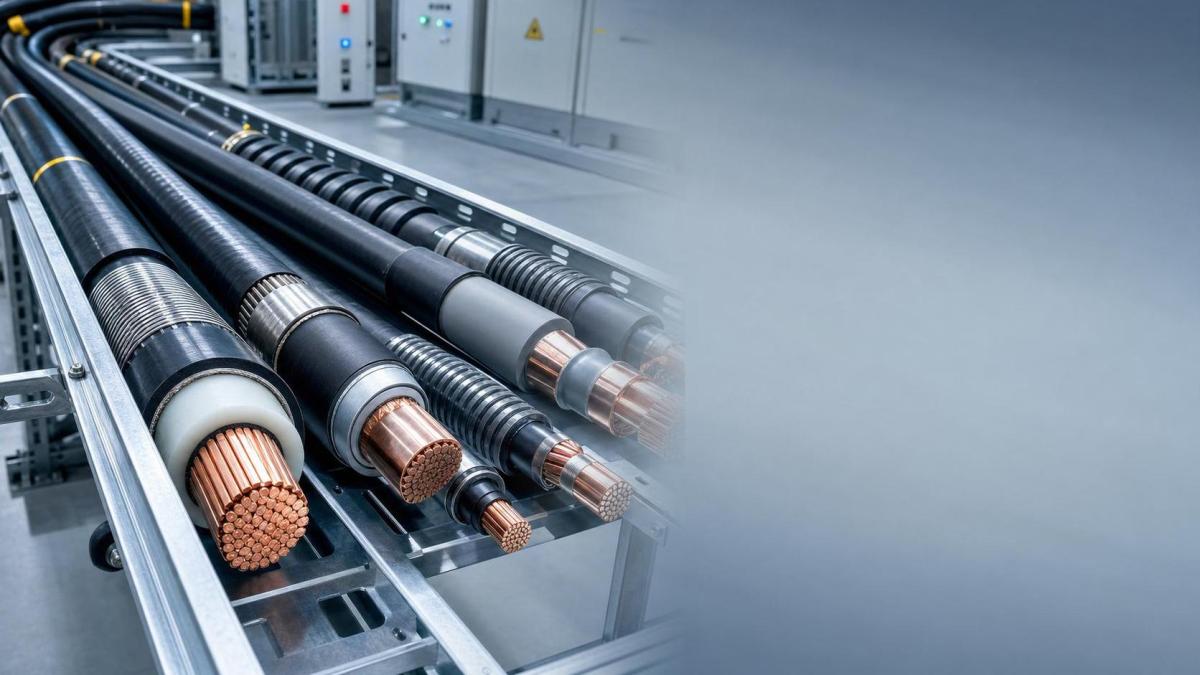
Ampacity is the maximum current a copper power cable can carry continuously without exceeding its temperature rating.
That simple definition hides several interacting variables.
Conductor size matters, but so do insulation, ambient temperature, grouping, installation method, and heat dissipation.
In real systems, ampacity is really a heat balance calculation.
Current generates heat through conductor resistance.
The surrounding environment either releases that heat efficiently or traps it.
If the heat stays inside the cable, temperature rises beyond acceptable limits.
Once that happens, insulation aging speeds up, performance drops, and failure risk increases.
Why Copper Power Cable Ampacity Affects Safety
A copper power cable that runs too hot creates more than efficiency loss.
It can weaken insulation, distort sheath materials, and reduce short-circuit tolerance.
Connections also suffer under repeated thermal cycling.
Loose terminations often start with excessive heating, not with visible mechanical damage.
This also means ampacity decisions influence inspection frequency and preventive maintenance plans.
From a risk perspective, undersized cable selection is only one issue.
Incorrect correction factors are just as dangerous.
A design may look compliant on paper, yet become unsafe after bundling, rerouting, or enclosure changes.
Core Factors That Determine Ampacity
Ampacity ratings are never based on conductor material alone.
A proper copper power cable review should include the following factors.
- Conductor cross-sectional area, which directly affects resistance and heat generation.
- Insulation type, such as PVC, XLPE, or EPR, each with different temperature limits.
- Ambient air or soil temperature, which changes cooling performance.
- Installation method, including tray, conduit, direct burial, or free air.
- Number of loaded conductors grouped together.
- Cable spacing, ventilation, and nearby heat sources.
- Operating duty, including continuous load, cyclic load, and overload conditions.
Among these, installation conditions are often underestimated.
The same copper power cable can have very different ampacity values in free air and in a crowded conduit.
That difference can be large enough to change the entire safety margin.
The Role of Standards and Rating Methods
Ampacity should always be checked against recognized standards.
Common references include IEC, NEC, IEEE, and national installation codes.
These standards define allowable conductor temperatures and correction methods.
They also set assumptions for ambient conditions and conductor loading.
However, published tables are starting points, not automatic answers.
If the site conditions differ from the standard assumptions, derating is required.
That is where quality and safety reviews become especially important.
A cable schedule may show compliance, but only field conditions confirm whether the selected copper power cable remains within thermal limits.
How Derating Changes Real-World Cable Performance
Derating adjusts the base ampacity when actual conditions reduce cooling.
This is where many avoidable design errors appear.
For example, high ambient temperature lowers allowable current.
So does tight grouping of several loaded cables in one tray.
Underground installation adds soil thermal resistivity to the calculation.
Moisture changes, compaction, and burial depth can all affect heat flow.
A practical review should ask three questions.
- What is the base ampacity under standard conditions?
- Which site factors require correction?
- After derating, does the copper power cable still meet demand with reserve capacity?
That reserve matters because load growth is common.
A design with no thermal headroom becomes a future compliance problem.
Copper Versus Other Conductors in Ampacity Planning
Copper remains a preferred conductor because of its strong conductivity and mechanical stability.
For a given size, a copper power cable generally supports higher current than aluminum alternatives.
Copper also performs well at terminations and in repeated thermal cycles.
That does not mean copper removes the need for careful design.
Even a high-quality copper power cable can fail early if the installation traps heat.
This is why conductor material should be evaluated together with system layout and environmental exposure.
Common Ampacity Mistakes That Create Hidden Risk
Several issues appear again and again during audits and incident reviews.
- Using table values without checking actual ambient temperature.
- Ignoring cable grouping after late-stage routing changes.
- Applying the wrong rating table for insulation type.
- Overlooking harmonics and unbalanced loads that raise heating.
- Assuming intermittent loads are harmless without duty-cycle analysis.
- Leaving no margin for expansion, aging, or poor ventilation.
These mistakes rarely look dramatic during design review.
The more obvious signal usually appears later as hotspots, nuisance trips, or insulation damage.
That delay is exactly why disciplined ampacity checks are so valuable.
A Practical Review Framework for Safer Selection
A strong review process keeps copper power cable selection grounded in evidence.
The following framework works well for technical and compliance decisions.
- Confirm design current, peak demand, and expected load profile.
- Verify conductor size, insulation rating, and short-circuit performance.
- Check routing, bundling, enclosure conditions, and external heat sources.
- Apply all relevant correction factors from the governing standard.
- Compare adjusted ampacity with operating demand and reserve margin.
- Document assumptions clearly for inspection, maintenance, and future modifications.
Where control systems, monitoring circuits, and industrial processes share the same project environment, cable coordination becomes even more important.
In those cases, related solutions such as Control Cables for Power Generation Metallurgy Petrochemicals Electronic Computers can support broader reliability planning across connected infrastructure.
Inspection and Monitoring After Installation
Ampacity verification does not end after commissioning.
Operating conditions often drift over time.
Load increases, routing changes, and enclosure additions can all reduce cooling.
That is why thermal inspection and load trend review should be routine.
- Use infrared scanning to detect abnormal hotspots.
- Review feeder loading against design assumptions.
- Inspect terminations for discoloration, loosening, or insulation hardening.
- Reassess derating when cable grouping or ambient conditions change.
This approach helps catch problems before insulation damage becomes permanent.
It also supports traceable compliance records during internal and external audits.
Final Takeaway for Safer System Design
Ampacity is the thermal reality behind every copper power cable decision.
When conductor size, insulation, environment, and installation conditions are reviewed together, design choices become much safer.
The most reliable systems do not rely on nominal table values alone.
They verify real conditions, apply correct derating, and leave room for change.
If a copper power cable is selected with that mindset, safety, compliance, and service life all improve together.
The next smart step is simple: review every current rating against actual installation conditions before the project moves any further.