

Understanding copper power cable begins with a simple fact: power systems still depend on conductors that balance safety, conductivity, durability, and cost. Copper remains central because it performs reliably across residential wiring, commercial distribution, and demanding industrial loads.
That matters in the cable and accessories sector, where a wrong choice can affect voltage drop, installation flexibility, operating temperature, and long-term maintenance. When comparing a copper power cable, the basics are not just technical details. They shape how well a project works in practice.
Why Copper Still Sets the Baseline
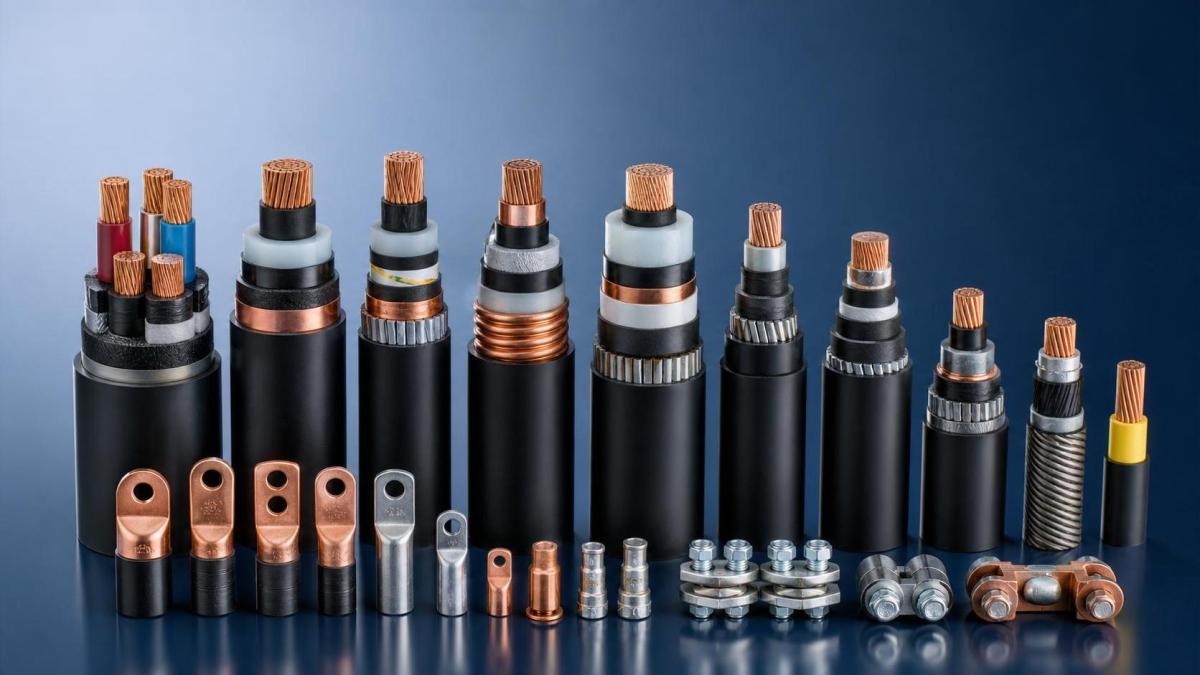
Copper is widely used because it offers high electrical conductivity in a compact size. That allows cables to carry current efficiently without becoming unnecessarily bulky.
It also handles mechanical stress well. In real installations, cables are pulled through conduits, bent around corners, and exposed to vibration or thermal cycling. Copper tolerates those conditions better than many alternatives.
Another reason copper power cable stays relevant is connection quality. Copper generally forms stable terminations, which helps reduce overheating risks at joints, lugs, and accessories.
In short, copper is not only about conductivity. It is also about predictable installation behavior and dependable service life.
What a Copper Power Cable Includes
A copper power cable is more than a metal conductor. Its performance depends on several layers working together under electrical and environmental stress.
Core components
- Conductor: solid or stranded copper that carries the current.
- Insulation: PVC, XLPE, rubber, or other materials that prevent leakage.
- Bedding or filler: supports shape and protects internal elements.
- Armor, if needed: adds mechanical protection in exposed routes.
- Outer sheath: resists moisture, abrasion, chemicals, or sunlight.
These elements help explain why two cables with the same copper conductor size may perform very differently in the field.
Common Types Seen Across Projects
The term copper power cable covers several categories. The right type depends on installation method, voltage class, environment, and flexibility needs.
By conductor structure
Solid copper cables are often used in fixed building wiring. They keep shape well and suit installations with limited movement.
Stranded copper cables are more flexible. They are common where routing is complex, vibration exists, or repeated bending may occur.
By insulation material
PVC-insulated cable is common in general indoor use. It is practical and cost-effective for many low-voltage applications.
XLPE-insulated cable supports higher temperature performance and stronger electrical properties. It is widely used in distribution and industrial environments.
Rubber or elastomer cables are chosen when flexibility matters, especially in temporary power, mobile equipment, or more rugged operating conditions.
By installation context
In lighter-duty settings, products such as 0.5-10 square millimeter household overhead power cable, signal cable, PVC insulated flexible wire cable fit practical needs where flexibility, PVC insulation, and smaller cross-sections are important.
Ratings That Deserve Closer Attention
Cable selection often goes wrong when buyers focus only on conductor size. A copper power cable should be judged through a set of linked ratings.
Voltage rating
Voltage ratings indicate the maximum system voltage the cable insulation is designed to withstand. Low-voltage building wire and medium-voltage distribution cable are not interchangeable.
Current-carrying capacity
Ampacity depends on conductor area, insulation type, ambient temperature, grouping conditions, and installation method. The same cable may carry different loads in free air and in conduit.
Temperature rating
Typical temperature classes include 70°C, 90°C, and higher for some specialty constructions. Higher ratings can support heavier loads, but only when terminals and accessories match.
Fire and environmental performance
In public buildings or enclosed spaces, flame retardancy, low smoke, and halogen performance may matter as much as electrical capacity. Outdoor use may also require UV and moisture resistance.
Where Copper Power Cable Is Most Commonly Used
Copper power cable appears across nearly every layer of power delivery, but each setting values different characteristics.
Residential systems
Homes typically use copper for branch circuits, lighting, sockets, grounding, and appliance connections. Here, safe termination and manageable cable size are major advantages.
Commercial buildings
Office buildings, retail sites, and public facilities need dependable distribution to lighting, HVAC, lifts, and emergency systems. Copper supports compact wiring layouts and steady performance under varying loads.
Industrial operations
Factories and processing plants often require copper power cable for motors, switchgear, machine feeds, and control-linked power circuits. Mechanical resilience becomes more important in these environments.
Infrastructure and utility support
Power distribution panels, backup systems, transportation facilities, and outdoor service lines also use copper where dependable conductivity and connection stability are priorities.
What the Market Is Watching Right Now
Interest in copper power cable is not driven by material preference alone. Several practical pressures are shaping buying decisions.
- Higher energy efficiency expectations are pushing closer attention to conductor losses and voltage drop.
- Tighter safety rules are increasing demand for compliant insulation, fire performance, and traceable ratings.
- Renovation work often requires cables that fit existing conduits without sacrificing load capacity.
- Smaller equipment and denser installations reward copper’s conductivity within limited space.
This is why selection now tends to be more application-led. Buyers are comparing the total installation result, not just the cable price per meter.
How to Judge Suitability in Real Projects
The best way to assess a copper power cable is to start with the route, the load, and the operating environment together.
- Match conductor size to actual current demand and acceptable voltage drop.
- Check whether the cable will be fixed, flexible, buried, exposed, or bundled with others.
- Confirm insulation and sheath compatibility with heat, oil, moisture, and sunlight.
- Review local codes, standard markings, and accessory compatibility before specifying.
- Consider termination quality, because a strong cable can still fail at a poor connection point.
For smaller-scale indoor and overhead runs, a flexible PVC option like 0.5-10 square millimeter household overhead power cable, signal cable, PVC insulated flexible wire cable may suit low-voltage distribution or combined signal-related tasks, provided the rating matches the installation.
A Practical Way to Move Forward
A copper power cable is rarely chosen well by material name alone. The better approach is to compare type, conductor structure, insulation, voltage class, and installation conditions as one system.
When reviewing options, it helps to build a short checklist around load, routing, flexibility, environmental exposure, and compliance needs. That turns a broad product category into a clearer decision.
From there, the next useful step is to narrow candidates by application, verify ratings against the actual circuit, and compare how each copper power cable will perform over time, not just at the point of purchase.