

Choosing between a PVC control cable and an XLPE alternative is rarely a minor specification detail. It shapes installation cost, operating reliability, maintenance cycles, and the safety margin of the whole system.
In cable and accessories projects, the right insulation type must match real conditions rather than catalog labels. Heat, moisture, bending, routing complexity, and expected service life all change the best answer.
A PVC control cable often remains the practical choice for standard indoor control circuits. XLPE becomes more attractive when higher thermal performance, electrical stability, or tougher environments start to drive risk.
Where the real difference begins
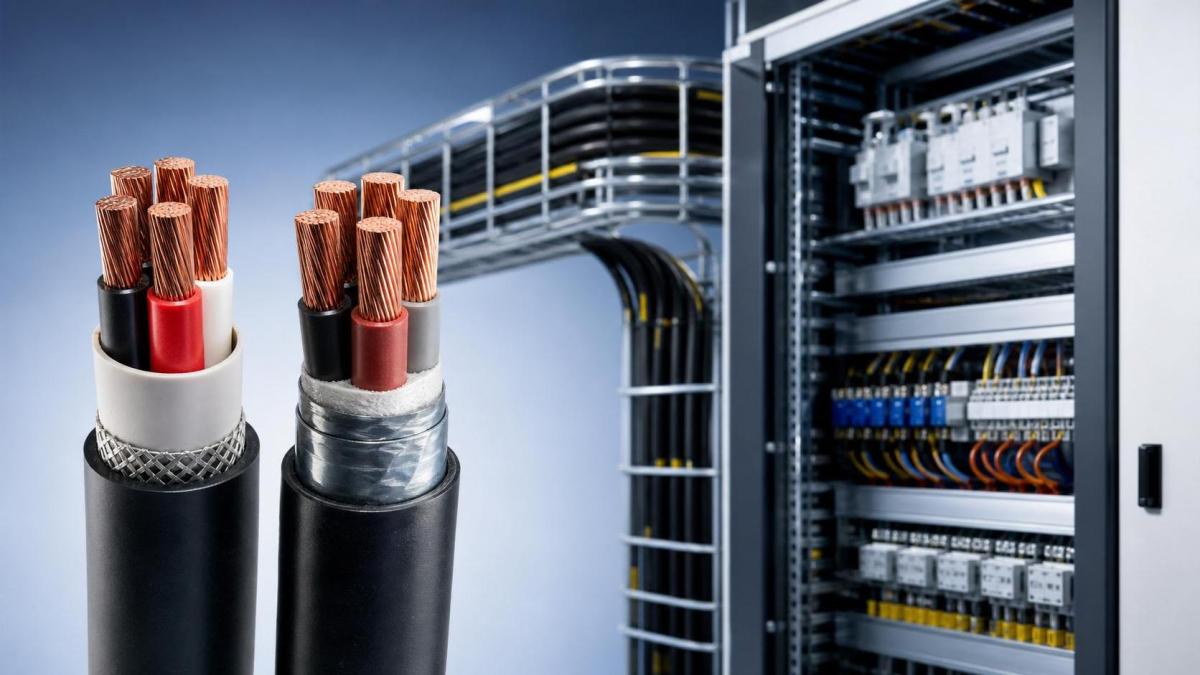
At a basic level, both cable types move signals or low-voltage power through industrial and building systems. The key difference is the insulation material wrapped around the conductor.
PVC is flexible, widely available, and usually more economical. That makes a PVC control cable common in panels, machinery connections, building services, and routine automation loops.
XLPE, or cross-linked polyethylene, is engineered for stronger thermal endurance and better insulation stability. It is often selected where cables face higher operating temperatures or stricter performance expectations.
This difference sounds simple, but in practice it affects conductor temperature, cable diameter, routing behavior, and long-term aging. Those factors can influence both procurement decisions and project scheduling.
Why this choice matters more now
Cable selection is under more pressure than before. Equipment density is rising, installation spaces are tighter, and downtime costs are less forgiving across industrial, utility, and infrastructure environments.
At the same time, projects are expected to balance budget discipline with longer service life. A low initial cable price may not help if early replacement, thermal derating, or maintenance access creates future losses.
This is why the PVC control cable versus XLPE question keeps returning during design reviews. The better option depends less on brand preference and more on how closely the cable matches site conditions.
Performance comparison in practical terms
Looking at technical sheets alone can feel abstract. A side-by-side view is more useful when deciding which cable type supports your application with fewer compromises.
In short, PVC wins on practicality and cost efficiency in many conventional installations. XLPE wins where temperature headroom and longer-term resilience matter more than the lowest purchase price.
When a PVC control cable makes strong sense
A PVC control cable is often the better fit when the installation environment is controlled and the electrical demand is moderate. Many industrial control systems do not need the extra thermal margin of XLPE.
It is especially useful where routing is complex and installers value easier handling. In cable trays, cabinets, and short equipment runs, flexibility and straightforward termination can save measurable labor time.
Budget-sensitive projects also benefit when performance requirements are clearly defined. Choosing XLPE for every line item may increase cost without improving operational results in ordinary indoor service.
- Building automation and HVAC control loops
- Machine wiring in dry or sheltered spaces
- Low-voltage control panels with stable temperatures
- Projects where installation speed affects handover timing
Where XLPE tends to justify itself
XLPE becomes easier to justify when the cable route passes through hot areas, confined spaces, or environments with tougher operational stress. A higher temperature rating can reduce performance concerns over time.
This matters in facilities where shutdowns are expensive and access is difficult. Replacing cable after commissioning is far more disruptive than making a more robust selection during design.
If the system may face future load expansion, XLPE can also offer a useful buffer. That extra headroom can be valuable when operating conditions become less predictable after project delivery.
The installation environment should drive the decision
Most selection mistakes happen because the cable is judged by nominal rating alone. Real site conditions often tell a different story once ambient heat, grouping, bending radius, and exposure are considered together.
For example, a PVC control cable may perform well in a clean control room but struggle if the same route passes near motors, hot ducting, or moisture-prone service corridors. Context changes suitability quickly.
Mechanical protection also matters. In some layouts, armor and waterproof construction can be more decisive than insulation alone. In those cases, a product such as Industrial PVC Insulated Armored Low Voltage Cable 3-Core 4-Core 5-Core Copper Waterproof Power Cable may align well with fixed low-voltage distribution or protected outdoor routing.
The point is not to choose by material in isolation. The cable should be evaluated as a complete construction, including conductor, insulation, sheath, armor, and environmental sealing.
Questions worth asking before final selection
A useful cable decision usually comes from a short, disciplined review rather than a long technical debate. These questions tend to reveal whether a PVC control cable is sufficient or whether XLPE is the safer path.
- What is the highest real ambient temperature along the full route?
- Will the cable be grouped tightly with other loaded cables?
- Is there moisture, oil, vibration, or direct outdoor exposure?
- How difficult will inspection, repair, or replacement be later?
- Does the system need spare capacity for future operating changes?
- Is installation labor or long-term durability the bigger cost driver?
These questions keep attention on lifecycle fit. That is usually more valuable than comparing only unit price per meter.
Balancing procurement cost with lifecycle value
Price always matters, but cable cost should be read in context. The cheapest option can become expensive if it forces larger derating margins, earlier replacement, or delays during installation and commissioning.
A PVC control cable often delivers excellent value where system conditions are stable and clearly understood. That makes it a very rational choice, not a compromise, in many mainstream control applications.
XLPE adds value when uncertainty is high or when operating stress is likely to grow. In that sense, the better cable is the one that reduces total project risk, not just the one with the higher specification.
A practical way to move forward
If the route is indoor, temperatures are controlled, and flexibility matters, a PVC control cable is often the efficient answer. If the route is hotter, harsher, or less accessible, XLPE deserves closer consideration.
The next step is to map the cable path, note environmental stress points, and compare thermal and mechanical demands against actual product construction. That approach creates a clearer basis for specification and fewer surprises after installation.
A careful review of insulation type, sheath protection, armor needs, and future load assumptions will usually narrow the decision quickly. When those factors are aligned, both performance and project control improve.