

PVC control cable selection rarely fails because of one obvious mistake. It usually fails when small compliance gaps are missed during comparison, specification, or approval.
That is why standards matter. A compliant PVC control cable supports stable signaling, safer installation, and fewer disputes over quality, ratings, or site suitability.
In cable and accessories procurement, the basic checks are not limited to conductor size or price. Insulation consistency, sheath performance, flame behavior, test documentation, and application fit all affect long-term project confidence.
Why PVC control cable standards deserve closer attention
A PVC control cable is commonly used for control circuits, monitoring lines, interlocking systems, and low-voltage signal transmission in industrial and commercial installations.
Its job is not to carry primary power loads. Instead, it helps equipment communicate, switch, and respond correctly under everyday operating conditions.
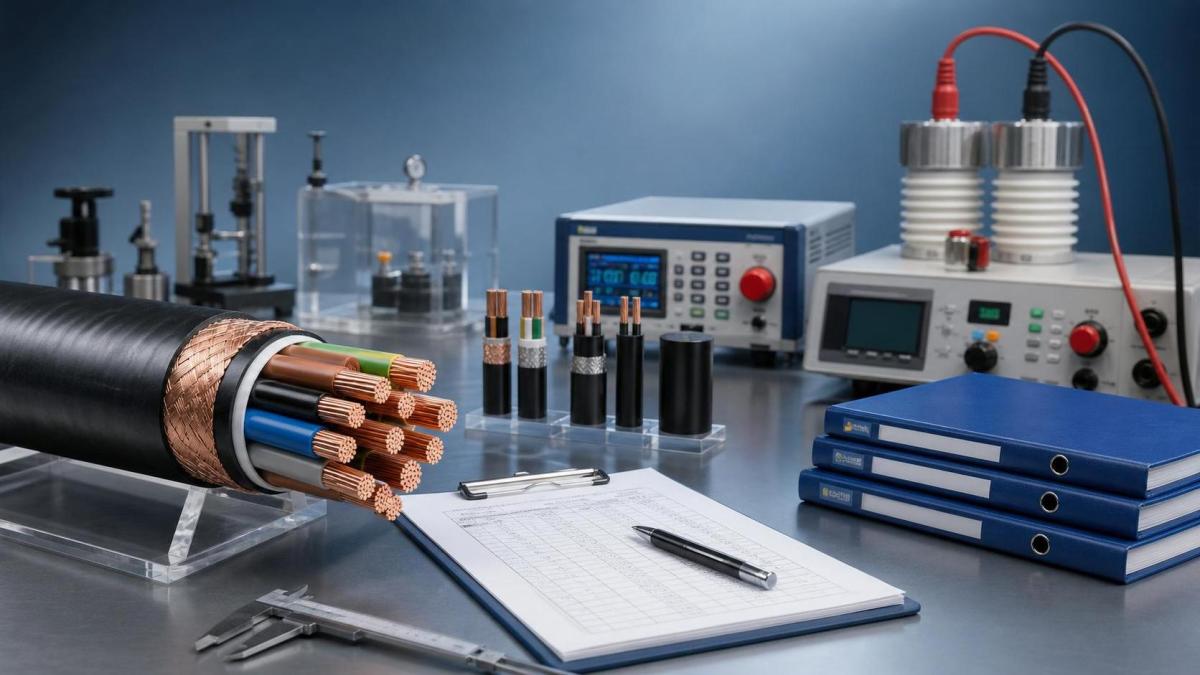
When standards are unclear, two products may look similar on paper but perform very differently after installation. This is especially relevant where shutdowns, troubleshooting, or replacement costs are hard to absorb.
The commercial risk is also real. If a PVC control cable lacks proper conformity evidence, projects may face delayed acceptance, documentation rework, or disputes over whether the cable was suitable from the beginning.
What defines a compliant PVC control cable
Compliance starts with matching the cable to the declared standard. This can involve IEC, BS, VDE, national standards, or project-specific technical requirements.
The important point is not the label alone. The cable should be built, tested, and marked in a way that aligns with the claimed reference.
Core technical elements usually reviewed
- Conductor material and class, including copper purity, stranding, and resistance values.
- PVC insulation thickness, uniformity, and resistance to heat, deformation, and aging.
- Sheath quality, especially abrasion resistance, flexibility, and protection during handling.
- Rated voltage, temperature range, and bending performance under installation conditions.
- Identification, color coding, printing, and traceability on the cable surface.
A PVC control cable may still be unsuitable even if one parameter looks acceptable. The full compliance picture comes from how these elements work together.
The standards and tests that often influence decisions
Different markets apply different references, but several testing areas appear repeatedly in cable evaluation.
Simple compliance claims are rarely enough. Test reports, declarations, and routine inspection records should match the exact PVC control cable being quoted.
Where specification gaps usually appear
Many evaluation issues start before the cable is manufactured. They begin with incomplete technical schedules or broad descriptions such as “standard PVC control cable.”
That wording leaves too much room for interpretation. Two suppliers may price different conductor classes, sheath grades, shielding structures, or fire performance levels.
Common areas needing clarification
- Fixed installation or occasional movement.
- Indoor tray use, duct routing, or outdoor exposure.
- Shielded or unshielded construction.
- Normal flame retardant, low smoke, or other fire-related expectations.
- Operating voltage and interference sensitivity.
A PVC control cable for a building automation panel does not face the same conditions as one used near motors, switching equipment, or dense industrial routing.
This is also where adjacent cable categories become relevant. In mixed projects, power and control lines are reviewed together, and comparison across cable types can improve consistency.
For example, projects that evaluate armored power distribution solutions alongside control circuits may also review products such as Copper-aluminum Core XLPE Insulated Steel Wire Armored PVC Sheathed Power Cable for Building Power Stations to understand how sheath materials, mechanical protection, and installation environments differ across cable functions.
How application context changes the compliance picture
The same PVC control cable can be acceptable in one project and unsuitable in another. Compliance is not only about passing tests. It is about matching tested characteristics to actual service conditions.
Building systems
In buildings, attention often centers on flame spread, orderly identification, compact routing, and compatibility with control cabinets, alarms, HVAC systems, and access control equipment.
Industrial facilities
In industrial settings, electromagnetic interference, oil exposure, mechanical stress, and temperature variation may deserve more scrutiny than basic voltage rating alone.
Infrastructure and utilities
In utility or infrastructure work, documentation depth, batch traceability, and long maintenance cycles often shape approval decisions as much as the cable structure itself.
In practical review, a PVC control cable should be assessed against route design, installation method, local code expectations, and the consequences of signal loss.
A practical framework for supplier and product comparison
A useful comparison process is less about collecting more brochures and more about asking sharper questions.
Points worth checking before approval
- Does the quoted PVC control cable identify the exact standard, not just a general market term?
- Are conductor, insulation, sheath, and shielding details listed in measurable terms?
- Do test reports reflect the same model, voltage class, and construction being offered?
- Is there evidence of routine factory testing and stable quality control?
- Are markings on the cable sufficient for installation control and later replacement?
- Does the product fit the site environment rather than only the budget target?
This approach also helps separate compliant alternatives from products that rely on vague wording. In many cases, the best value is the option with clearer evidence, not the lowest initial quote.
What to carry into the next evaluation step
A sound PVC control cable decision combines standards knowledge with application logic. Technical compliance, installation conditions, and documentation quality should be reviewed as one package.
Where projects include both control and power cable systems, checking related solutions such as Copper-aluminum Core XLPE Insulated Steel Wire Armored PVC Sheathed Power Cable for Building Power Stations can also sharpen category boundaries and reduce specification overlap.
The next sensible move is to turn broad requirements into a comparison checklist: standard reference, voltage rating, fire behavior, conductor class, shielding need, installation environment, and supporting test records.
Once those points are defined clearly, PVC control cable evaluation becomes less subjective, easier to document, and more reliable across suppliers, projects, and future maintenance decisions.